

Every spin of a slot reel, every flip of a digital card, each bounce of the virtual roulette ball comes down to one hidden mechanism: the Random Number Generator. Without such a system, online casinos like Spinboss Casino would be hollow facades. Upon logging in, claim a bonus, and launch a game, we place our trust in an algorithm that produces millions of numbers per second, all of them unpredictable, untamed, and independently audited. We’ve dug into how these RNGs truly function, what makes them fair, and how Spinboss Casino leverages them to power a library that spans everything from Egyptian-themed slots to immersive live dealer tables. This is the lowdown you won’t find in the promo blurbs—the true mechanics, the oversight bodies, and the strategic angles that turn randomness into an edge worth understanding.
Provably Fair Play: How Blockchain Changes RNG Transparency
If standard RNG testing comes across as putting faith in a black box, the provably fair trend tears the box apart. Originally popularised by cryptocurrency casinos, provably fair technology enables players directly verify that every game result was produced randomly and untampered. This system relies on cryptographic hashing: the casino generates a server seed and hashes it up with a SHA-256 algorithm, then shows the encoded version before the player commits their spin. The player also supplies a client seed—usually automatically created by the browser or typed in manually. Once the round ends, the casino shows the original server seed, and the player can use the combination of both seeds plus the nonce value (a round counter) to recalculate the outcome locally. If the results match, the game has been verified fair. This eradicates the requirement for blind trust in a testing lab, but labs still fulfill a role in auditing the execution.
We’re excited to see this idea spreading into popular platforms, and while not every game at Spinboss Casino may offer a full provably fair interface, the direction is clear. Several top-tier providers now include hash verification in their table games and even some slots. For a crypto-savvy player who deposits Bitcoin or Ethereum at Spinboss, the ability to check each dice roll or card draw with a few lines of code is a game-changer. It’s not just about fairness; it’s about control. The casino actively says, “Don’t trust us, verify us.” In a arena where distrust is the norm, that’s a powerful statement. We’ve seen many players who were initially hesitant about online gambling become converts precisely because they could examine the randomness for themselves.
Is it possible to use provably fair verification on all Spinboss Casino games? Not quite yet—traditional slots from NetEnt or Play’n GO rely on certified server-side RNGs and do not show client-side seeds, but their fairness is equally genuine. The key is to check the game’s info panel for a “provably fair” tab or a verification link. Although a game doesn’t support it, Spinboss’s own licensing and the testing seals we discussed earlier bridge the trust gap. But we admire the direction the industry is going: a hybrid model where standard RNG games exist alongside blockchain-verified titles, offering us the best of both worlds. It’s a reminder that randomness isn’t a static concept; it’s progressing with technology, and smart casinos keep up with that curve.
Spinboss Casino’s Safe Framework: Financial Operations, Permits, and RNG Confidence
The RNG doesn’t operate alone. It’s one pillar of a trust tripod that also encompasses ironclad licensing and protected monetary operations. Spinboss Casino operates under an acknowledged gaming permit—typical jurisdictions like Curaçao or Malta with regulatory systems mandate RNG certification as a prerequisite for operation. We routinely suggest reviewing the footer for the licence number and regulator logo; clicking it should redirect to the official register where you can check the casino’s compliance. This licence is your ultimate backstop. If the operator attempted to manipulate with the RNG, they’d encounter legal repercussions from the audit laboratories but swift permit withdrawal. That’s a risk no established casino with numerous active users would ever assume, and that’s why the RNG we play under today is the identical one the auditors certified.
The payment layer reinforces trust in a less obvious way. When you deposit at Spinboss via Visa, Skrill, Neteller, bank transfer, or a cryptocurrency like Bitcoin, your funds go through secured channels that the casino itself is unable to alter. The settlement periods are normal for the industry: e-wallet withdrawals often land within 24 hours, card payouts can take 3–5 business days, and crypto transactions may complete in minutes, depending on network congestion. While this appears unrelated to RNG, it’s actually crucial. A casino that holds up payouts or manufactures verification hurdles can erode faith in the full operation, making you second-guess the fairness you relied on. Spinboss maintains transparent cashier pages and a support team that details any pending withdrawal’s status, which in a roundabout way strengthens confidence that if the operator is straightforward about money, they’ll be truthful about the RNG.
Portable and desktop security completes the circle. Every spin request from your device to Spinboss’s servers is encrypted with TLS 1.3 technology, meaning nobody can hijack the RNG outcome between the server and your screen. Man-in-the-middle attacks, where a third party could modify the result in transit, are practically impossible. Beyond that, the casino’s responsible gambling framework, including self-exclusion and session reminders, doesn’t just protect vulnerable players; it demonstrates a corporate maturity that you won’t find in rogue operations. We’ve combed through enough fly-by-night casinos to know that when an operator invests in comprehensive player protection, the RNG is nearly always as advertised. The whole system—licence, payments, encryption, customer support—either enhances the RNG or drags it into doubt by association. At Spinboss, the ecosystem is harmonized in the player’s favour.
We set out to clarify the random number generator, and what we uncovered is a multi-layered architecture of mathematics, auditing, and trust engineering. The RNG at Spinboss Casino isn’t a shadowy genie granting questionable wishes; it’s a rigorously tested algorithm driven by entropy, validated by independent labs, and situated inside a protected, licensed platform that seeks you to win fairly—knowing the house edge will do its work over time. Next time you launch a slot after taking that lavish welcome offer, keep in mind: the outcome was settled in a blink of pure randomness, yet it’s supported by a stronghold of regulation and technology. Your move now is to step into the lobby, choose a game whose volatility suits your style, and experience firsthand the beautiful uncertainty that only a adequately powered RNG can provide. Give it a spin, confirm it if you can, and play with the certainty of someone who has looked under the hood.
RNG Variance, Bonus Wagering, and Your Gaming Approach
Grasping the RNG provides a door to a more intelligent bonus strategy, and that’s the moment the conversation moves from pure mechanics to applied play. All games at Spinboss Casino, from the humblest classic fruit slot to the most sophisticated Megaways monster, has a volatility rating determined by its RNG table. Games with low volatility map more random numbers to modest, frequent wins; high-volatility titles steer more outcomes toward prolonged dry spells punctuated by massive hits. When you claim a welcome package—say a match bonus plus free spins—the wagering requirement compels you to play through the bonus amount a certain number of times. If you select a high-volatility slot with an high wagering multiplier, your balance could disappear before the RNG has a chance to produce a big win. That’s not a flaw; it’s chance. We invariably check the game weighting table in Spinboss’s bonus terms to ascertain which slots contribute 100% toward wagering and which are blocked or reduced.
Below is a specific framework for matching RNG characteristics with bonus fulfillment:
- Find the wagering requirement and time limit. If you have 35x wagering on your bonus amount and seven days to clear it, you need a game that offers enough spin volume without crushing your balance.
- Browse Spinboss’s lobby by volatility. Many providers label slots as low, medium, or high variance. For bonus play, medium-volatility titles often find the sweet spot—keeping you alive long enough to meet the rollover.
- Skip table games for bonus wagering unless explicitly allowed. Most online casinos, Spinboss included, weight table game contributions at 10% or even 0%. The RNG in blackjack may be fair, but playing it to clear a bonus is usually a losing strategic move due to the low contribution.
- Be aware of capped winnings from free spins. Even though the RNG could technically deliver a €5,000 jackpot on a free spin, the bonus terms often cap the withdrawable amount. That doesn’t make the RNG unfair; it’s a commercial limit you need to factor in.
- Select the “check game info” button. Spinboss’s interface usually includes RTP and volatility details right inside the game help file. If a 93% RTP slot is your only option, understand that the RNG’s long-term payout is lower, so your rollover journey will be steeper.
We also cannot ignore the psychological element. The RNG doesn’t care about your balance, but you should. Setting win and loss limits before you start a session is a direct acknowledgment that randomness is unpredictable. At Spinboss Casino, the responsible gaming tools—deposit limits, reality checks, time-outs—are built directly into the account dashboard. They don’t influence the RNG, but they influence your exposure to it. That’s a distinction worth pondering: the RNG remains mathematically pure, while the human element remains responsibly managed. Match that with strategic game selection based on volatility and RTP, and you’ve got a blueprint for a session that feels energetic and controlled, rather than a helpless surrender to the digital dice.
The Overseers: Who Certifies Casino RNGs?
No virtual casino obtains a free pass on trust. That’s where the independent testing laboratories come stomping in. When we browse the footer of Spinboss Casino’s homepage, we must expect to see the crest of at least one accredited test house—consider eCOGRA, iTech Labs, GLI (Gaming Laboratories International), or BMM Testlabs. These are no rubber-stamp outfits; they put RNG algorithms through exhaustive statistical analysis, including diehard tests, chi-squared tests, and Marsaglia’s “Diehard” battery, among others. They scrutinize billions of simulated outcomes, checking for biases, streaks, or any deviation from true randomness. A certificate from one of these bodies signifies the RNG has been proven to produce unpredictable, independent, and uniformly distributed results over the long term. For gamblers, that logo is a silent guarantee that when we load up Gonzo’s Quest, the avalanche reels aren’t secretly conspiring against us.
After the preliminary certification, the labs also carry out ongoing audits. Many jurisdictions demand monthly or even weekly reports where the testing house retrieves live game logs from Spinboss Casino’s servers and feeds them through verification software. This ensures the RNG in the live environment hasn’t been exchanged for a gimped version after certification. The process is stringent enough that even game developers—NetEnt, Microgaming, Pragmatic Play, and others whose titles populate Spinboss’s lobby—submit their RNG implementations for testing before the game is ever released. So, by the time a slot arrives in the “New Games” carousel, it’s been vetted through a battalion of mathematicians and statisticians. We love seeing that extra layer because it signifies the responsibility doesn’t rest solely on the casino operator; the entire supply chain is held to the same standard.
Which things should we seek when evaluating an RNG certificate? Here’s a quick checklist to hold bookmarked in your mind:
- An obvious certification seal on the casino’s homepage. It should be tappable, leading to a real-time verification page or a scanned PDF of the certificate with a validity date.
- The testing laboratory’s name and accreditation. Established names like eCOGRA, iTech Labs, or GLI hold authority. A questionable no-name lab with a suspicious logo is a red flag.
- Audit frequency stated in the certificate. A once-off test from 2018 is invalid. Look for language like “ongoing monthly monitoring” or “continuous RNG evaluation.”
- Game-specific attestations. Some certificates encompass the operator’s entire platform, while others specify individual game titles. The more extensive the coverage, the better.
- Regulatory body endorsement. Often the testing lab is authorized by the licensing authority, such as the Malta Gaming Authority or the Curaçao eGaming board, adding a official enforcement layer to the technical audit.
These regulators exist because the primary question every sharp player asks is “Is it fair?” Spinboss Casino’s willingness to order and display these audits tells us the operator is not concealing behind smoke and mirrors. The instant we can validate a certificate on our own, the RNG no longer is an abstract algorithm and transforms into a authorized, supervised, and publicly accountable element of our entertainment. It transforms distrust into informed confidence, and that’s the kind of vibe we want before depositing.
How Spinboss Casino Routes RNG Power into Your Favorite Games
Walk into the Spinboss Casino lobby and you’re welcomed by a wave of vibrancy—countless slots, dozens of table games, a extensive live dealer wing, and unique instant-win scratchcards. What binds this whole ecosystem unified is the RNG core that guarantees every result, whether it’s in a gritty Norse mythology slot or a sleek European roulette layout, is separate and equitable. We’ve observed how the casino partners with industry-leading software houses like Pragmatic Play, Evolution Gaming, and others, each of which employs its own certified RNG system. The result is an orchestra of chance where no two games sing the same melody. On Thunderstruck II, the RNG decides not only the base game spins but also which bonus feature triggers when you access the Great Hall of Spins—a multi-tiered random happening that’s unrelated to your previous bonus history.
The portable experience at Spinboss deserves a notable mention. We fired up the platform on a mid-range Android device, and the RNG-driven games opened via HTML5 in seconds, no download required. The tactile “tap to spin” motion transmits a request to the server in an encrypted packet, the server sends back the RNG-determined outcome, and the animation executes seamlessly. It’s all over within 300 milliseconds. That speed is critical because any lag between the user action and the result could plant doubt. The fact that Spinboss routes its RNG traffic through high-speed cloud infrastructure means the randomness feels instantaneous and immediate—precisely the physical sensation a slot should offer. And because the platform is device-agnostic, the same RNG algorithms work for you on an iPhone during a commute or on a desktop at home, with zero disparity in fairness or performance.
Where the RNG showcases its versatility is in the bonus rounds. When we unlocked 50 free spins on Book of Dead via Spinboss’s welcome offer, the RNG processed each free spin outcome and the special expanding symbol selection at the start of the feature. That symbol is plucked from the game’s symbol set right before the free rounds begin, using a fresh set of random numbers. There’s no pattern we could leverage, no “hot cycle” to follow. The RNG treats the bonus identically to the base game. This uniformity is a trademark of a well-implemented system and it’s one of the reasons we recommend always reading the bonus terms—not because the RNG is rigged, but because wagering requirements can be tied to how the game’s math model interacts with randomness, a topic we’ll unpack next.
What Exactly Is a Random Number Generator and How It Functions?
At its core, a Random Number Generator in an online casino is a software program that creates a sequence of numbers with no apparent pattern. The version you’ll find at Spinboss Casino and practically all trustworthy platforms is a Pseudo-Random Number Generator, or PRNG. “Pseudo” does not indicate fake; it means the numbers are produced by a algorithmic algorithm that starts from a seed value. That seed could be sourced from a authentically random physical source—like user mouse movements on the casino’s server, thermal noise, or even atmospheric radio static—but the algorithm itself runs a mathematical formula so complex that the output meets every statistical test for randomness. Every millisecond, the PRNG generates a fresh number, even when no one is playing. The moment we click “Spin,” the game grabs the most recent number and translates it to a game outcome: a symbol on a payline, a card value, or a roulette pocket. It’s a beautiful marriage of math and timing.
For what reason does the casino use a PRNG instead of a “true” hardware random number generator? Straightforward: speed and scalability. Spinboss Casino’s platform runs hundreds of games from dozens of providers, all running simultaneously. A hardware RNG might be a bottleneck, whereas a well-coded PRNG can handle thousands of requests per second without breaking a sweat. The algorithm powering many PRNGs is the Mersenne Twister, famous for its enormous period—2^19937−1—which assures that the sequence won’t repeat for an astronomically long time, far beyond the lifetime of the universe. To put that in perspective, if you played a million spins a second, you’d never live to see the pattern loop. The real magic, however, isn’t the math alone; it’s how the PRNG is continuously re-seeded from entropy sources to prevent predictability. That constant injection of environmental noise holds even the most determined hackers at bay.
We frequently hear the question: “How can I be sure the RNG isn’t rigged in the house’s favour?” The brief answer is that the house edge is baked into the game’s rules, not into the RNG itself. A slot at Spinboss Casino might have a theoretical Return to Player of 96.5%, which means the RNG generates outcomes that over billions of spins will settle to that payout percentage. The RNG doesn’t “know” you’ve just lost ten hands of blackjack; it simply offers a fair, random card on the eleventh. The real fairness check lies in independent certification, which we’ll explore next. For now, understand that every time you play European Roulette on your phone at Spinboss, the RNG is producing a number between 0 and 36, each with exactly 1 in 37 probability, and the ball lands there without memory, without mercy, and without a hidden agenda.
Video slot versus table game RNG mechanisms: Randomness differs between games
A widespread false belief is that one universal RNG powers every game in the lobby. Actually, the way random numbers are used differs radically between slots and table games, and understanding that difference can shift your strategy for your session at Spinboss Casino. Slot machines use what’s called a “continuous shuffling” RNG model. The RNG produces numbers ceaselessly, and each number matches a reel stop position. Modern video slots commonly use a virtual reel mapping, where a single random number decides the final position of all reels simultaneously, and the game program maps that number to a pre-calculated outcome in a large lookup table. This means the game determines whether you’ve won the moment you press spin, even before the reels commence their animation. The theatrical build-up—the near-miss symbols, the clinking sound effects—is entirely dopamine choreography wrapped around an outcome that was predetermined by the RNG in a microsecond.
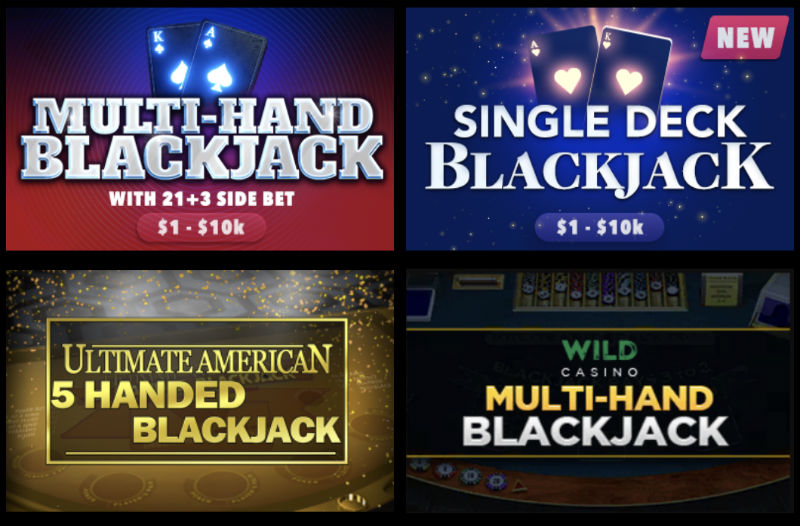
Table games, in contrast, typically use event-driven RNG consumption. In digital blackjack at Spinboss, the RNG doesn’t run constantly in the background calculating your next card while you consider hitting or standing. Instead, the software invokes the RNG only at the exact moment a card is needed. For a single deck game, the algorithm might randomize an array of 52 cards using a Fisher-Yates shuffle seeded by a series of RNG numbers, then distribute them from memory. In a continuous shuffle machine style, it pulls a random number and assigns it to a card on the fly. This makes the process clearer in some ways; you can in principle verify that each card has an equal chance of appearing. Roulette works similarly—a single random integer between 0 and 36 is obtained at the moment the “ball” is released. There’s no infinite reel mapping, just a straightforward one-to-one correspondence between the raw RNG output and the game result.
Why does this distinction matter? Because the psychological experience is entirely different. Slots are engineered to deliver a high frequency of small wins and near-misses to maintain engagement, a design entirely permitted by the RNG’s mapping but not influenced by it unfairly. The mapping table is audited to ensure the advertised RTP, but the moment-to-moment ride is crafted by the game designer, not the RNG itself. Table game RNGs, by contrast, feel more “raw”—two bad beats in a row at blackjack sting because the absence of visual cushioning makes the randomness feel more brutal. We often recommend that new players at Spinboss Casino start with a few hands of RNG blackjack or roulette before diving into slots, because it builds an intuitive grasp of randomness without the sensory overload. Both are fair, but they serve up randomness on different plates.
답글 남기기